Finding your flow — wellness for the working woman.
A 3 hour immersive workshop that teaches working women how to work with their hormonal rhythms — not against them.
Workshop · A women’s wellness programme
Lunar Living.
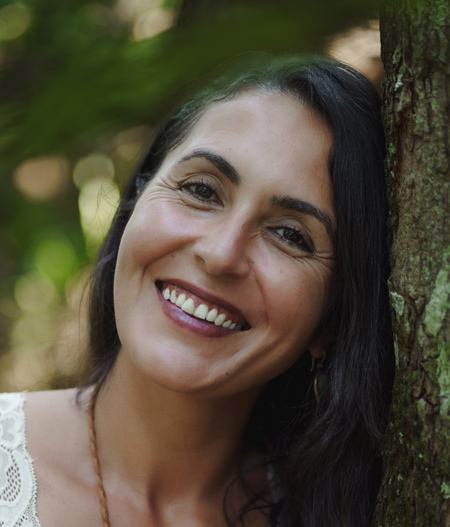
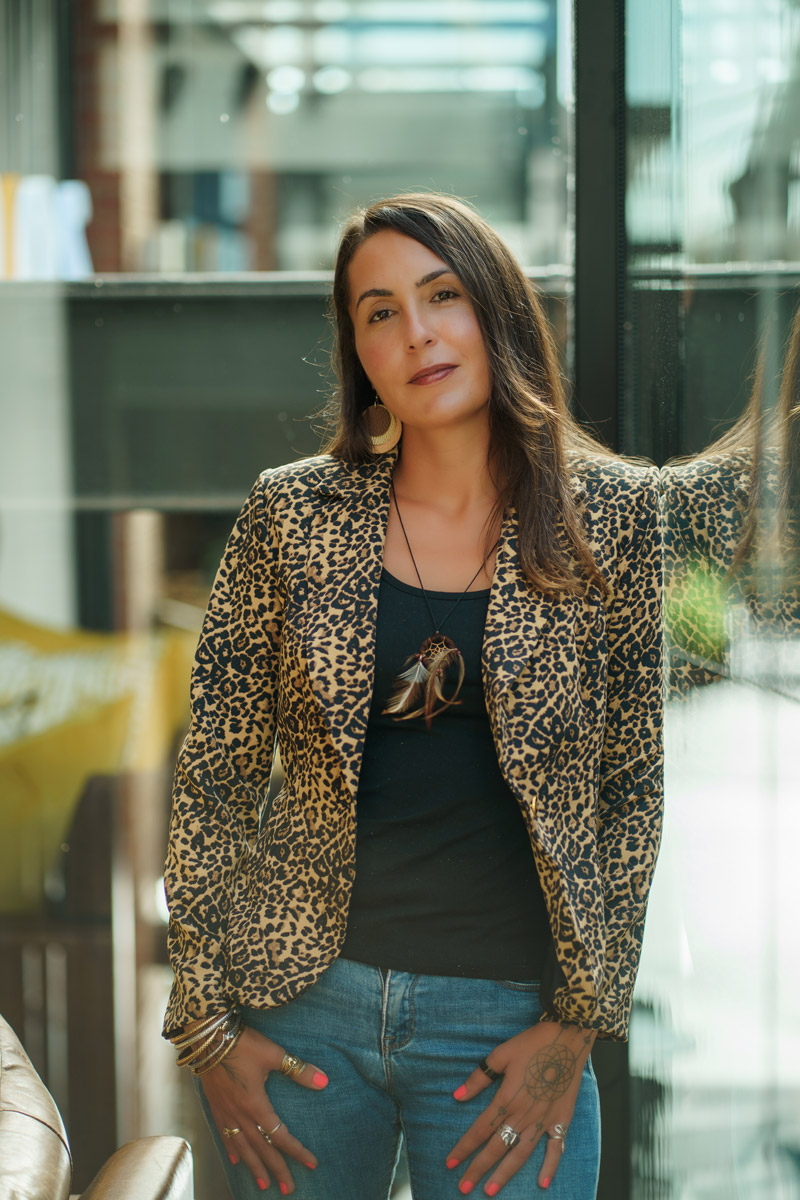
Facilitated personally by Maxi-Lee
In person & online
B-BBEE fundable
3 hours.
that change everything
Who this is for
This programme is for her.
Lunar Living is designed for working women at every level — graduate to C-suite — who are showing up every day and quietly paying a price that nobody in their organisation sees or understands.
The four modules
What your women will learn.
Four evidence-based modules drawing on the work of Dr. Mindy Pelz, Dr. Jolene Brighten, Dr. Sara Gottfried, Lisa Mosconi PhD and other leading authorities in women’s health.
What’s included
The basic framework is consistent, but workshop content adapts based on the pre-workshop questionnaire to ensure relevance for the women in your team.
Formats & availability
In person. Online. Everywhere.
In-Person Workshops
- Delivered at your premises or chosen venue
- Available across South Africa
- Up to 50 participants per session
- Half-day intensive option for senior leadership
Online Workshops
- Delivered via Zoom or your preferred platform
- Available globally — SA, UK, EU, USA, Australia
- Same content, same energy, same facilitation
- Ideal for hybrid and distributed teams

The business case
The case for investing in your women.
Wellness investment is not a soft spend. It is one of the most evidence-backed returns available to any organisation — particularly when targeted at working women.
The cost of doing nothing
$1.8B
in lost US working time annually from menopause/perimenopause productivity loss (Mayo Clinic)
$26.6B
in additional health expenses each year — rising to $600B globally (Mayo Clinic / AARP)
10%
less earned by women four years after seeking menopause care (Stanford SIEPR, 2025)
47%
of women report burnout — significantly higher than male colleagues (Deloitte)
1 in 5
women with menopause symptoms have considered leaving their job
The return on wellness
$3.27
returned per $1 invested in wellness programmes (Harvard meta-analysis)
20%
higher productivity in companies with wellness programmes (Global Wellness Institute)
25%
lower employee turnover with effective wellness programmes
95%
of companies that measure wellness ROI report positive returns
”"This is not a wellness perk. It is a retention tool, a productivity investment, and for many South African organisations — a B-BBEE strategy. The women in your team are already paying the cost. The question is whether your organisation pays it with them, or pays it back to them."
— Maxi-Lee Machado
The human case
Behind every statistic, a woman.
She is sitting in a meeting trying to hold it together while her body sends signals she does not understand, has never been taught to understand, and is too professional to mention.
She is one of your best people. She is probably mid-career — exactly at the point where her experience and her hormonal transition are colliding.
“Three hours. That is what Lunar Living takes. And what it gives back is knowledge that changes how she experiences her body, her work and her life — permanently.”
Frequently Asked Questions
The questions I get most often — from women trying to work out if this is for them, from HR managers trying to work out if it’s right for their company, and from doctors who ask me what I actually teach. Honest answers below. If yours isn’t here, send me your question here.
Hormonal Health FAQs
The questions every working woman is asking
Am I burnt out, or am I in perimenopause?
This is the question your EAP isn’t built to answer. Burnout and perimenopause produce nearly identical symptoms — exhaustion, brain fog, irritability, sleep disruption, weight gain, lowered stress tolerance. The difference is the cause. Burnout is environmental. Perimenopause is hormonal. Most working women in their 40s have both at the same time, but only one is being treated. Treat the wrong one and the symptoms get louder, not quieter.
Dr Sara Gottfried calls cortisol “the master hormone” because when it’s dysregulated, it suppresses progesterone, disrupts thyroid, and drives oestrogen dominance. So your “burnout” might actually be the downstream effect of a hormonal cascade that started years ago. The workshop teaches you how to tell the difference and what to do about each.
When does perimenopause actually start?
Most women — and most doctors — think menopause is something that happens at 50. It isn’t. Menopause is one day. Perimenopause is the 10-year hormonal transition into it, and it can start as early as 35.
The symptoms peak between 42 and 48. If you’re in your late 30s or 40s and you don’t feel like yourself, you’re not imagining it and you’re not “too young.” You’re in the largest hormonal shift of your adult life and almost nobody has told you it’s happening.
Why hasn't my doctor caught this?
Because standard GP bloods don’t catch it. A normal TSH, a normal full blood count, and a normal oestrogen reading on day 21 of your cycle does not mean your hormones are balanced. Perimenopause is characterised by fluctuation, not deficiency — so any single-day blood draw can miss it entirely.
Dr Sara Gottfried’s functional medicine work has shown for years that the standard testing model under-diagnoses hormonal disruption in women in their late 30s and 40s. None of this is a criticism of your doctor. It’s a limitation of how the system is designed to look for problems. The workshop won’t replace your doctor — but it will give you the vocabulary to ask better questions at your next appointment.
What is "cortisol dysregulation" and why does everyone keep talking about it?
Cortisol is your stress hormone. It’s supposed to spike in the morning and taper through the day. When you’re chronically stressed — running a team, raising children, sleeping badly, drinking coffee from 7am to 4pm — that rhythm breaks. Cortisol stays elevated when it shouldn’t, and crashes when it shouldn’t.
That single dysregulation suppresses progesterone (which is why you can’t sleep), disrupts your thyroid (which is why you’re cold and tired), and drives oestrogen dominance (which is why the weight isn’t moving and your moods are unpredictable). Almost every “hormonal problem” working women experience traces back here. Module 2 of the workshop — Stress, Cortisol and the Working Woman — is built around this single insight.
Is intermittent fasting safe for women? I tried it and lost my hair.
If you did 16:8 every day, especially in the luteal phase of your cycle, your body read it as a chronic stress signal. You needed cycle-aware fasting, not generic fasting. This is the exact mistake I made on my own journey — I lost 45kg using fasting and juicing, then over-fasted
without hormonal awareness, lost handfuls of hair, and my cycle stopped completely.
Dr Mindy Pelz’s Fast Like a Girl protocols saved me. Her core insight is that women cannot fast the way men do because oestrogen and progesterone govern when fasting helps and when it harms. Days 1–10 of your cycle, your body can handle longer fasts. Days 17–28, it cannot. I’m one of the first certified Fast Like a Girl coaches in South Africa, and Module 3 of the workshop — Food, Fasting and Female Energy — teaches the protocol that works without breaking your body. Don’t fast another day without understanding this.
Is the brain fog real, or am I imagining it?
It’s real. The female brain has oestrogen receptors throughout — particularly in the hippocampus (memory) and prefrontal cortex (executive function). When oestrogen drops in perimenopause, brain energy metabolism changes measurably.
Neuroscientist Lisa Mosconi’s work, including her book The Menopause Brain, has shown this on functional MRI scans. The cognitive dip is not laziness, not age, and not your imagination. It is a neurological transition that nutrition, sleep, fasting, and hormonal support directly impact. You can come back from this. Most women don’t know that.
Can I balance my hormones naturally, or do I need HRT?
That’s a conversation between you and your doctor, and the answer depends on your symptoms, your family history, and your stage of perimenopause. What I teach is the foundational work that benefits every woman, regardless of whether she eventually
chooses HRT: cycle-aware nutrition, cortisol regulation, gut health for oestrogen clearance, sleep architecture, and stress recovery practices.
Dr Christine Northrup’s whole-woman medicine framework, Dr Sara Gottfried’s functional approach, and Dr Amy Shah’s circadian work all agree on one thing: the foundational work has to happen before — or alongside — any medical intervention, or the intervention won’t hold. The workshop teaches the foundation. Your doctor handles the medical decisions.
What's the gut-hormone connection?
Your gut microbiome contains a community of bacteria called the estrobolome, whose job is to metabolise and clear oestrogen from your body. When the estrobolome is damaged — by antibiotics, processed food, chronic stress, or poor sleep — oestrogen gets recirculated instead of cleared. That’s a major driver of oestrogen dominance.
Dr Amy Shah’s book I’m So Tired lays out the gut–immune–hormone connection in detail. This is the underexplored piece of women’s hormonal health and it’s why nutrition matters more than supplements. You’ll get the practical protocol in Module 3.
Is it too late for me? I'm 55, 60, 65…
No. The hormonal foundations — cortisol regulation, sleep, gut health, blood sugar stability, muscle maintenance — matter at every age. The protocols shift, but the work continues. Dr Christine Northrup’s frame is that menopause is not an ending but an initiation into a different kind of vitality. I’ve had women in their 60s in workshops who said it was the first time anyone had explained what their body had been doing for the last 20 years. It’s never too late to understand your body.
Do I need to be tested before doing anything?
No. The foundational work — cycle awareness, cortisol regulation, cycle-aware fasting, food, sleep — works without testing and is safe for almost every woman. Where testing matters is when you’re considering specific interventions like HRT, thyroid medication, or addressing a suspected condition. Those are conversations for your healthcare provider. The workshop is education, not diagnosis.
I'm on Ozempic (or another GLP-1). Is this workshop still for me?
Yes. More than ever, actually.
Whether you’re on Ozempic, Wegovy, Mounjaro or Zepbound is a medical decision between you and your doctor — and it’s not one this workshop has an opinion on. What this workshop does have an opinion on is that the medication is not doing all the work, and the work it isn’t doing is the work your hormones still need.
Here’s what GLP-1s do well. They reduce appetite, slow gastric emptying, improve insulin sensitivity for many women, and produce measurable weight loss for the majority of users.
For women with insulin resistance, PCOS, or pre-diabetic markers, that’s a genuine clinical intervention. Dr Sara Gottfried, one of the functional medicine experts I draw on, prescribes them in her own practice for these reasons. She’s clear that they can be the right tool for
the right patient.
Here’s what GLP-1s don’t do.
- They don’t address cortisol. The most common reason women in their 40s feel exhausted, foggy and emotionally flat isn’t appetite — it’s cortisol dysregulation suppressing progesterone and disrupting thyroid. The medication won’t touch that.
If you’ve lost weight on Ozempic but still wake at 3am, still have brain fog by 11, still feel irritable by 4pm — that’s not the appetite hormone. That’s the stress hormone.
Module 2 of the workshop is built entirely around this. - They don’t protect muscle. This is the most under-discussed risk of GLP-1 use for perimenopausal women. Research that Dr Mindy Pelz — the clinician I trained under — has been raising the alarm on shows that 25 to 40% of the weight lost on GLP-1s can be lean muscle, not just fat. For a woman in perimenopause, lean muscle is the single most important predictor of metabolic health, bone density, cognitive resilience, and how you’ll feel at 60, 70, 80. Losing it now to lose kilos faster is a trade most women aren’t making with full information. The workshop’s nutrition and movement protocols are specifically designed to preserve and build lean mass — especially if you’re on a GLP-1.
- They don’t make nutrient density automatic. If your appetite is suppressed and you’re eating 800–1,200 calories a day, every bite has to do nutritional work. Dr Amy Shah’s research on the gut-immune-hormone axis matters more for GLP-1 users, not less — the smaller window of food intake means each meal has to support gut health, oestrogen clearance and brain function. Module 3 — Food, Fasting and Female Energy — teaches how to make a smaller plate hormonally rich.
- They don’t account for your cycle. Your prescription doesn’t change in the luteal phase. Your hormones do. Cycle-aware nutrition and movement protocols work alongside the medication and often reduce the side effects women report (nausea, low mood, fatigue, sleep disruption) by aligning what you do eat with what your hormones need that week.
- They don’t protect your brain. Lisa Mosconi’s neuroscience work shows that the perimenopausal female brain is in a critical metabolic transition. It needs specific nutrients — omega-3s, B vitamins, choline, antioxidants — to maintain cognitive performance through the shift. On a suppressed appetite, those nutrients are easy to under-eat without realising it. The brain-food principles in the workshop matter more, not less, when intake is limited.
And honestly — they don’t solve the question of what happens when you stop. The published research is clear: most users regain a significant portion of lost weight within 12 months of discontinuation unless the underlying lifestyle work is in place. The foundational work this workshop teaches is the underlying work. Whether you stay on the medication for years or come off it in months, the protocols are the protocols. They make the medication work better, and they keep working after.
The position I take is simple: your decision about Ozempic is yours. My job is to make sure that whatever you decide, your hormones, your muscle, your brain and your gut are protected — because the medication on its own doesn’t do that, and most prescribers won’t have the time to explain why. That’s the gap the workshop fills.
This is educational, not medical advice. If you are on a GLP-1 medication, any changes to your nutrition, fasting practice or supplement routine should be discussed with your prescriber. The workshop is designed to complement medical care, not replace it.
The information on this page is educational and draws on the published work of leading women’s health experts. It is not intended as medical advice. Every woman’s hormonal picture is unique — please consult your healthcare provider before making significant changes to your diet, fasting practice, or supplement routine.
Individual Bookings FAQs
Booking a workshop for yourself
I've tried supplements, coaches and "wellness journeys" before. Why would this be different?
Because you don’t leave with a list. You leave with a 30-day cycle-aware protocol, a small cohort of women who understand exactly what you’re going through, and the vocabulary to know what’s happening in your body so you stop second-guessing yourself. Most wellness work fails because it doesn’t address cortisol and the female cycle. This work starts there. And it’s facilitated personally by me — not a junior coach, not a chatbot, not a recorded video.
I don't have time for a Saturday workshop.
I know. That’s the entire reason this workshop exists — built for women who don’t have time. It’s 2–3 hours. Not a weekend. Not a residential. Not a journey. You walk in at 9, you walk out by noon with a written plan you can run alongside a full-time job, three children and a marriage. If you genuinely cannot make a Saturday, message me — most workshops are also delivered online at a 10% discount, and corporate sessions run during the working week through your company.
Is this a "feminine energy" or women's circle thing?
No. The content is clinical, evidence-based, and cites Dr Mindy Pelz, Dr Sara Gottfried, Dr Amy Shah, Lisa Mosconi and Dr Christine Northrup. There’s no chanting, no journalling prompts, no “honouring your goddess.” I’m a working mother of three, a law graduate, a 15-year B-BBEE advisor, and a certified Fast Like a Girl Coach. The work is grounded in physiology and practical action. The change is what’s transformational — not the framing.
What if I'm not interested in fasting?
Fasting is one module of four. Food, Fasting and Female Energy covers it because it’s one of the most misunderstood and misapplied practices in women’s health, and you should know what’s true even if you choose not to do it. The other three modules — your hormonal blueprint, cortisol and stress, and thriving at work — stand entirely on their own. You’ll leave with a useful protocol whether you fast or never fast again.
Will this conflict with what my doctor has told me?
It shouldn’t. The workshop teaches foundational nutritional, behavioural, and lifestyle practices. None of it replaces medical care, prescribes medication, or claims to diagnose anything. If you’re on HRT, antidepressants, thyroid medication, or anything else, what you learn complements those interventions. If you have a specific concern, bring it to me before the workshop and I’ll tell you honestly whether anything in the content might need adjusting for you.
Can my partner come?
Workshops are for women only because the conversation goes places that don’t happen in mixed-gender rooms. That said — I’ve been asked this often enough that I’m planning a “Bring Him Up to Speed” session later in 2026: a short, separate session where partners get the science so they can support the women in their lives. Sign up to the email list and you’ll hear when it launches.
How big are the workshops?
Maximum 50. Up to 20 included in the base price. The smaller the room, the deeper the work — most public workshops cap at 25. The smaller cohort is why you’ll actually speak, not just sit and listen.
What happens after the workshop? Do I just leave with a stack of notes?
No. Every attendee joins a 30-day cohort WhatsApp group with me, where you ask the questions that come up as you run the protocol, get accountability, and stay connected to the women you met in the room. The accountability is where most women find the actual shift happens.
How much does it cost?
Public workshops are priced per seat depending on the venue and the cohort. Message me directly at hello@maxi-lee.com for the next public dates and pricing. If your company is interested in running it for your team, scroll down — it’s R2,000 per woman at full corporate rate, often funded through your employer’s B-BBEE budget at zero net cost to your salary.
Is it in-person or online?
Both. Public workshops run in-person across South Africa. Corporate workshops are delivered on-site at your company. Online delivery is available at a 10% discount and is identical in content — same modules, same WhatsApp group, same impact.
Group Bookings FAQs
For HR Managers and wellness leaders
How is this different from our EAP?
Your EAP is built to catch mental health concerns. This work is built to catch hormonal ones. They are not competing — they are complementary. The reason your EAP usage in your 38–46 women’s cohort is near zero is not because those women don’t need support. It’s because what they’re experiencing isn’t a mental health problem, it’s a hormonal one being mistaken for a mental health one. They don’t book the counsellor because they don’t think a counsellor is what they need. They’re right. They need this conversation first.
We already have a wellness vendor. Why add another?
Because most wellness vendors are built around general adult wellness — mindfulness, ergonomics, financial literacy, generic nutrition. None of that addresses the specific hormonal transition affecting your highest-performing women in their 40s. Deloitte’s 2025 data found that 1 in 4 working women are experiencing hormonal health challenges right now, and 40% work through high levels of pain rather than taking time off. Your existing vendor isn’t catching it because they weren’t built to. This work isn’t a replacement — it’s the missing module.
How do you measure outcomes?
Every corporate workshop includes a pre-workshop anonymised survey of the cohort, a post-workshop survey at day 45, and a written impact report comparing the two. The report is the artefact you take to your CFO, your CHRO, or your board. Most wellness spend produces zero defensible data. This produces a written before-and-after impact assessment with engagement, knowledge, behaviour change and intent-to-stay metrics.
How is this funded? Does it have to come from our wellness budget?
This is the most important question and it changes the commercial conversation entirely.
The workshop is billed through NutriVita SA — a 72% Black-owned, 31% Black women-owned, Level 2 B-BBEE contributor. That means your spend recognises at 125% on the Preferential Procurement scorecard (Code Series 500). The workshop content itself qualifies under Skills Development (Code Series 300), which is a priority element on the B-BBEE scorecard.
For many corporates, the net cost to P&L is effectively zero. The R40,000 you spend buys you a workshop and B-BBEE point uplift that costs you nothing additional. I can send the funding memorandum on request — it’s a two-pager most HR heads use to get CFO sign-off in one conversation.
What does it cost?
R40,000 per workshop for up to 20 participants — that’s R2,000 per woman. Additional participants up to a max of 50 are R2,500 each. The price includes the pre-workshop survey, the 2–3 hour workshop facilitated personally by me, the 30-day cohort WhatsApp group, and the written day-45 impact report. Series bookings (3, 6, or 12-month programmes) are available at preferred pricing. Online delivery carries a 10% discount.
What about our male employees? Won't they feel excluded?
The workshop is for women because the conversation has to be. But the case I make to every HR head is this: caring for the hormonal reality of half your workforce isn’t exclusion — it’s overdue. Companies that run this workshop consistently report that male managers respond positively once they understand the business case. We’ve never had a backlash. If you want, the run sheet is shared with your communications or DEI lead before delivery, so nothing in the room is a surprise.
Will the content be politicised or contentious?
No. The content is clinical and evidence-based, citing functional medicine MDs, neuroscientists, and certified clinicians. We send the run sheet to your DEI or comms lead for sign-off before delivery. You see every slide. Nothing surprises you. This is not a feminism workshop. It’s a physiology workshop with practical action.
Can you run this for senior leadership only, or for specific cohorts?
Yes — and I recommend you start there. Most clients begin with a cohort of high-performing women managers at the EXCO+1 level, measure the impact, and then roll it out more broadly. The smaller cohort produces deeper engagement and a stronger impact report — both of which make the case for the next session easier to build.
What does the workshop cover in 2–3 hours?
Four modules: Your Hormonal Blueprint (the map of what’s happening at every life stage), Stress, Cortisol and the Working Woman (why your highest performers are exhausted), Food, Fasting and Female Energy (the cycle-aware protocol), and Thriving at Work — Practical Strategies (what they do on Monday morning). Every woman leaves with a 30-day written plan, the cohort WhatsApp group, and the vocabulary to advocate for their own health going forward.
How do we book?
Two options. Email me directly: hello@maxi-lee.com with your team size, preferred dates, and on-site or online preference. Or request the B-BBEE funding memo first if your CFO needs the financial case before the conversation continues. I’ll respond within 24 hours either way.
A note from Maxi-lee
I built this workshop because I lost my hair, my cycle and almost my career to a hormonal collapse I didn’t see coming — and I’m not letting another working woman lose hers without knowing what to do. The work is clinical, the science is solid, the experts are world-class. But what makes the room different is that I’ve lived this. I’m not teaching theory. I’m teaching what I had to learn the hard way, so you don’t have to.
If your question isn’t here, ask me directly; hello@maxi-lee.com
— Maxi-lee
Pricing
One booking.
Three ripples.
South Africa
R40,000
for up to 20 participants — in person or online
- R2,500 per additional participant (up to 50)
- R2,000 cost per woman at full capacity
- One free high-school session with every booking
- Often net R0 via B-BBEE Skills Development
International — Online
$2,000
USD equivalent — global online workshops
- Same content, same personal facilitation
- Available UK, EU, USA, Australia & beyond
- Final pricing confirmed at booking
- Series & retainer pricing available
Available add-ons
- Series bookings (3, 6 or 12-month) — preferred pricing
- Executive women’s intensive — full-day, C-suite focused
- Menopause and perimenopause specialist session
- One-to-one executive wellness coaching — monthly retainer
Also available
- B-BBEE funding memorandum & scorecard analysis
- Lunch & Learn (90 min) for hybrid teams
- Post-workshop team check-in at 30 days
- Custom modules for specific organisational needs
Never working against you ⚬ Find your flow ⚬ Work with your rhythm ⚬ Your body loves you ⚬
Never working against you ⚬ Find your flow ⚬ Work with your rhythm ⚬ Your body loves you ⚬
Never working against you ⚬ Find your flow ⚬ Work with your rhythm ⚬ Your body loves you ⚬
Never working against you ⚬ Find your flow ⚬ Work with your rhythm ⚬ Your body loves you ⚬
Never working against you ⚬ Find your flow ⚬ Work with your rhythm ⚬ Your body loves you ⚬
B-BBEE Benefit
This workshop may cost you nothing.
Lunar Living workshops are billed through NutriVita South Africa — a 72% Black-owned, 31% Black-women owned, EME, Level 2 B-BBEE contributor.